
What is circumcision surgery?

 Circumcision surgery is a procedure where the foreskin, the retractable fold of skin that covers the head (glans) of the penis, is surgically removed. This practice is primarily conducted for medical, cultural, or religious reasons and is one of the oldest surgical procedures known to humanity.
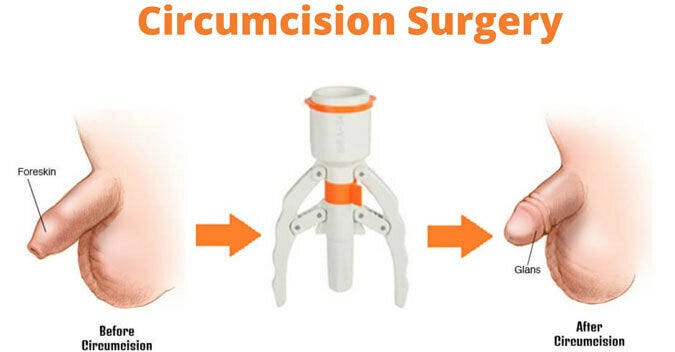

Medical Reasons for Circumcision:

  1. Hygiene: Removing the foreskin can make it easier to keep the penis clean, potentially reducing the risk of infections such as balanitis (inflammation of the glans) or urinary tract infections (UTIs).
  2. Prevention of Phimosis: Phimosis is a condition where the foreskin is too tight to retract over the glans, which can lead to discomfort, inflammation, and difficulty urinating. Circumcision may be recommended in severe cases.
  3. Reduction of Risk for Penile Cancer: Some studies suggest that circumcision can reduce the risk of penile cancer, although this disease is rare overall.
  4. Decreased Risk of Sexually Transmitted Infections (STIs): Research indicates that circumcision may reduce the risk of acquiring certain STIs, including HIV, herpes simplex virus type 2 (HSV-2), and human papillomavirus (HPV).


Procedure Overview: Circumcision surgery is usually performed by a trained healthcare professional, such as a pediatrician, urologist, or surgeon. The procedure can be performed under local anesthesia (numbing the area around the penis) or general anesthesia (where the patient is unconscious).


During the surgery:

  • The foreskin is gently separated from the glans and then removed using a scalpel or a circumcision clamp.
  • The remaining edges of the skin are stitched together with dissolvable stitches or adhesive glue.
  • After the procedure, a protective dressing may be applied to the penis to promote healing and prevent infection.


Recovery and Aftercare:

  • Mild discomfort, swelling, and redness are common in the days following circumcision.
  • Pain relievers and proper hygiene practices are recommended to manage discomfort and reduce the risk of infection.
  • It typically takes about one to two weeks for the penis to heal completely, during which time sexual activity and strenuous physical activities should be avoided.


Considerations:

  • Circumcision is an elective procedure, and the decision to circumcise is often influenced by cultural, religious, and personal beliefs.
  • The American Academy of Pediatrics (AAP) and other medical organizations recognize that the benefits of circumcision outweigh the risks, but they also stress the importance of informed parental decision-making.

In conclusion, circumcision surgery involves the removal of the foreskin from the penis and is performed for medical, cultural, or religious reasons. It is a relatively safe procedure when performed by a skilled healthcare provider and is accompanied by specific considerations for recovery and aftercare.

Comments

Popular posts from this blog

What are the potential benefits of circumcision?

 Circumcision, the surgical removal of the foreskin from the penis, is a practice that has been performed for various reasons across different cultures and religions. While the procedure is often controversial and debated, it’s worth exploring the potential benefits that have been identified through medical research and clinical studies. Here are some of the potential benefits of circumcision: 1. Reduced Risk of Urinary Tract Infections (UTIs) Studies have shown that circumcision can lower the risk of urinary tract infections, particularly in infants and young children. UTIs can be painful and lead to more serious health issues if left untreated, so reducing their incidence is a significant benefit. Circumcision is believed to reduce the risk by eliminating the potential for infections that can occur in the foreskin area. 2. Decreased Risk of Sexually Transmitted Infections (STIs) Circumcision has been associated with a lower risk of certain sexually transmitted infections, includ...

What is laparoscopic surgery used for?

Dr. Chirag Gupta: Leading Urologist and Laparoscopic Surgeon in Jaipur Introduction : Dr. Chirag Gupta stands as a distinguished figure in the medical community of Jaipur, renowned for his expertise as the best urologist in Jaipur. Specializing in urology and laparoscopic surgeries, Dr. Gupta has become a trusted name for patients seeking advanced and compassionate care in Jaipur and Jagatpura. About Dr. Chirag Gupta: A luminary in the field of urology, Dr. Gupta has earned a reputation for being a compassionate healer and an innovator in laparoscopic surgical techniques. His commitment to excellence and patient-centric approach make him a sought-after  urologist in Jaipur . Services Offered by Dr. Chirag Gupta: 1. Urological Expertise: As the best urologist in Jaipur, Dr. Gupta specializes in the diagnosis and treatment of various urological conditions. His proficiency extends to comprehensive urologic care, including the management of male infertility, kidney stones, an...

👨‍⚕️ Meet Dr. Chirag Gupta – The Best Urologist in Jaipur for Kidney Stone & Prostate Treatment

  Are you searching for the Best Urologist in Jaipur for expert care in urology and andrology? Look no further than Dr. Chirag Gupta , a highly trusted name in urological treatments with a focus on compassionate, advanced, and minimally invasive care. Located conveniently in Jagatpura , Jaipur, Dr. Gupta is known for his excellence in treating kidney stones, prostate issues, male infertility, and urinary disorders. 📞 Book Your Appointment Today: +91 7506943955 🌟 Why Dr. Chirag Gupta is the Best Urologist in Jagatpura, Jaipur Dr. Chirag Gupta is a skilled and experienced urologist in Jaipur who provides holistic care for both men and women. Patients from all over the city, especially from Jagatpura , trust his diagnosis, surgical precision, and commitment to long-term health. With his specialized expertise, he has earned a reputation for offering the Best Urologist Treatment in Jaipur , ensuring each patient receives personalized attention and top-quality care. ...